Selected Research
Plant genomes and CRISPR
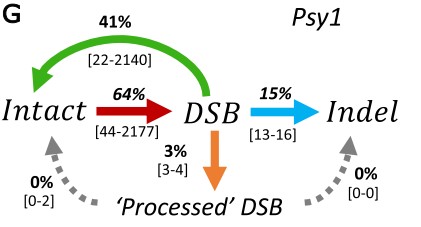
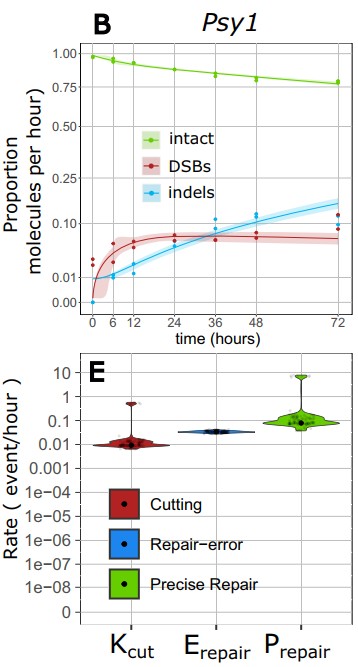
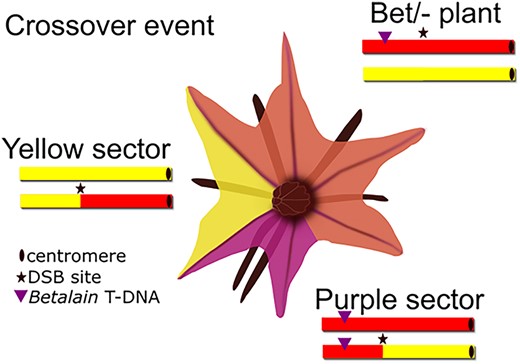
Often in literature it is assumed that when both strands of DNA break, leading to DNA Double Strand Breaks (DSB), they will be most often repaired inaccurately. However, using CRISPR in tomato plants and modeling the dynamics of DNA repair, we could infer that DNA is repaired precisely to a remarkable degree. Note that often people equate the amount of edits (for example indels) that CRISPR will generate to its “efficiency”. If an important proportion of cuts is in fact invisible, this is not a valid assumption, and the precision of DNA repair should be taken into account to predict CRIPSR efficiency. After all, this makes sense: DSB are dangerous for the cell. In another study we also observed something else in fact: often DSB caused by CRISPR, even in plants, can lead to to massive rearrangements, which seem to be mediated - at least in some cases - by Barbara McClintok’s breakage-fusion-bridge cycles.

Archaic hominin genomes
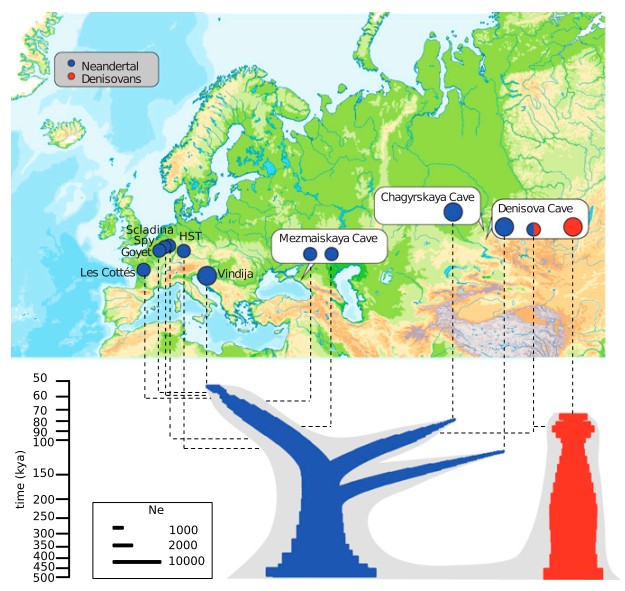
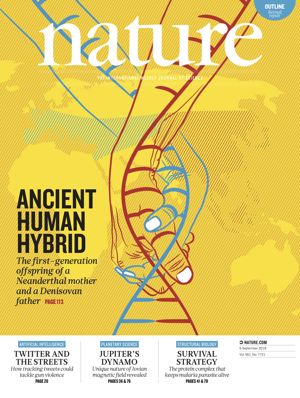
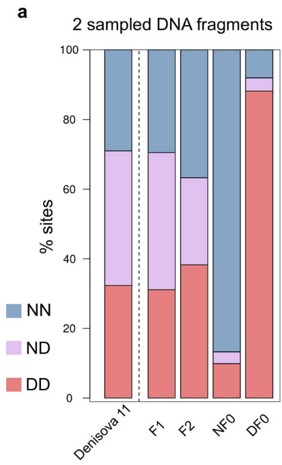
There are a few genomes which are impossible to forget. I had the privilege to work with some colleagues on Denny’s genome - the daughter of a Denisovan father and Neanderthal mother. In fact, Denny had a Neanderthal mtDNA and while the rest of the genomes in nearly equal proportions of Neanderthal and Denisovan ancestry. This is an incredible finding, since it shows us beyond any doubt that archaic hominins interacted with each other - likely in the region where Denisova cave is. One might wonder: what are the chances to find such sample. Low, I agree, incredibly low. We were lucky. But it is also worth noticing that such encounters might not have been so incredibly rare in Denisova cave. For example, using the length of tracts found by Ben Vernot, I could estimate that the the lineage of the Denisovan father of Denny already encountered Neanderthals a few millennia before. Still rare, but not unique!
When later leading the analyses of the third-high coverage Neanderthal genome, we noticed that this was probably from the same original population as Denny’s mom. This Neanderthal - which came from Chagyrskaya cave, about 100 km from Denisova cave, it confirmed us that Neanderthals spread several times eastwards towards Siberia - once replacing the ancient lineage of the “Altai Neanderthal” published in 2014 - a prediction which we already made in 2018 using the maternal component of the low coverage genome of Denny - a prediction which we were happy to confirm. I think that together with archaeological findings, this probably represents the earliest (or one of the earliest) documented cultural and human population replacement. Second, the Neanderthal from Chagyrskaya showed a massive portion of the genome devoid of diversity. This led us to revisit the notion that the Altai Neanderthal in 2014 had a similar pattern because product of inbreeding: perhaps inbreeding was the default in Siberia. With some metapopulation modeling I could show that Neanderthals in Siberia likely differed from modern humans, Denisovans and likely even western Neanderthal (after all Siberia is the extreme east of their geographical distribution), and likely lived in small population of less than 50 individuals. Of course these inferences are limited by the small number of sequenced archaic genomes. But in a more recent study by Massilani et al. (PNAS,2026) we could confirm this prediction.
A high-coverage Neandertal genome from Chagyrskaya Cave, Mafessoni et al., PNAS, 2020
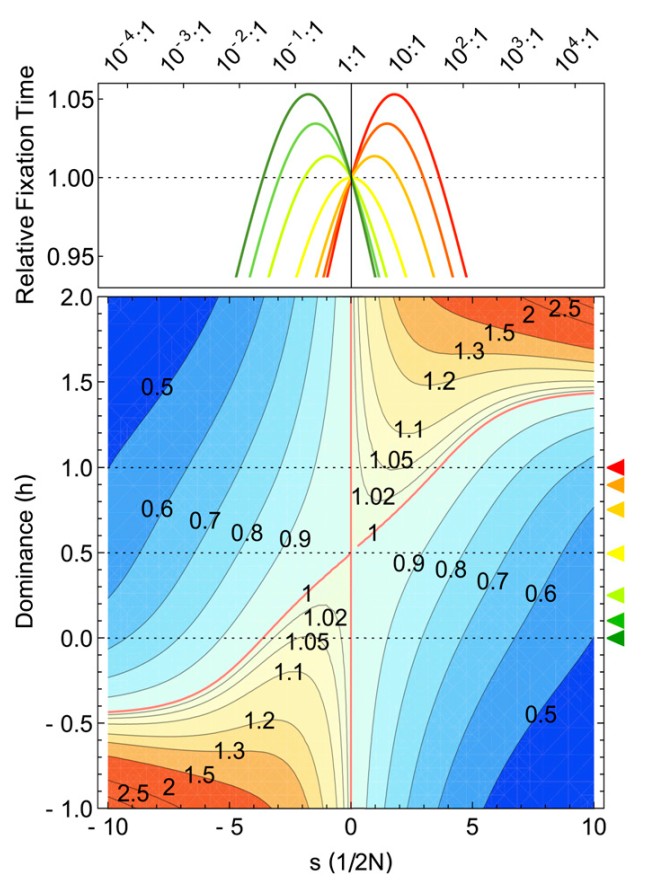
Genetics, 2015 — A common belief in population genetics is that positively selected mutation reach fixation more rapidly than neutral ones - a phenomenon which leads to the so-called “selective sweeps”. And viceversa, that deleterious mutations reach extinction more rapidly than neutral ones. Michael and I showed that this is not true for weakly selected mutations, which account for a large portion of newly occurring mutations. In fact, in diploids, fixation times for weak dominant mutations under positive selection are slower than for neutral ones. And weakly deleterious recessive mutations have slower extinction times than neutral, accumulating at low frequencies, where they have longer sojourn times than neutral ones. I still find pretty incredible that weak selection behaves in this respect almost in the opposite way of strong selection, and that such property - probably because so counterintuitive - remained hidden in plain sight from Kimura, Ohta, and all the amazing population geneticists which explored the stochastic dynamics of selected alleles before.